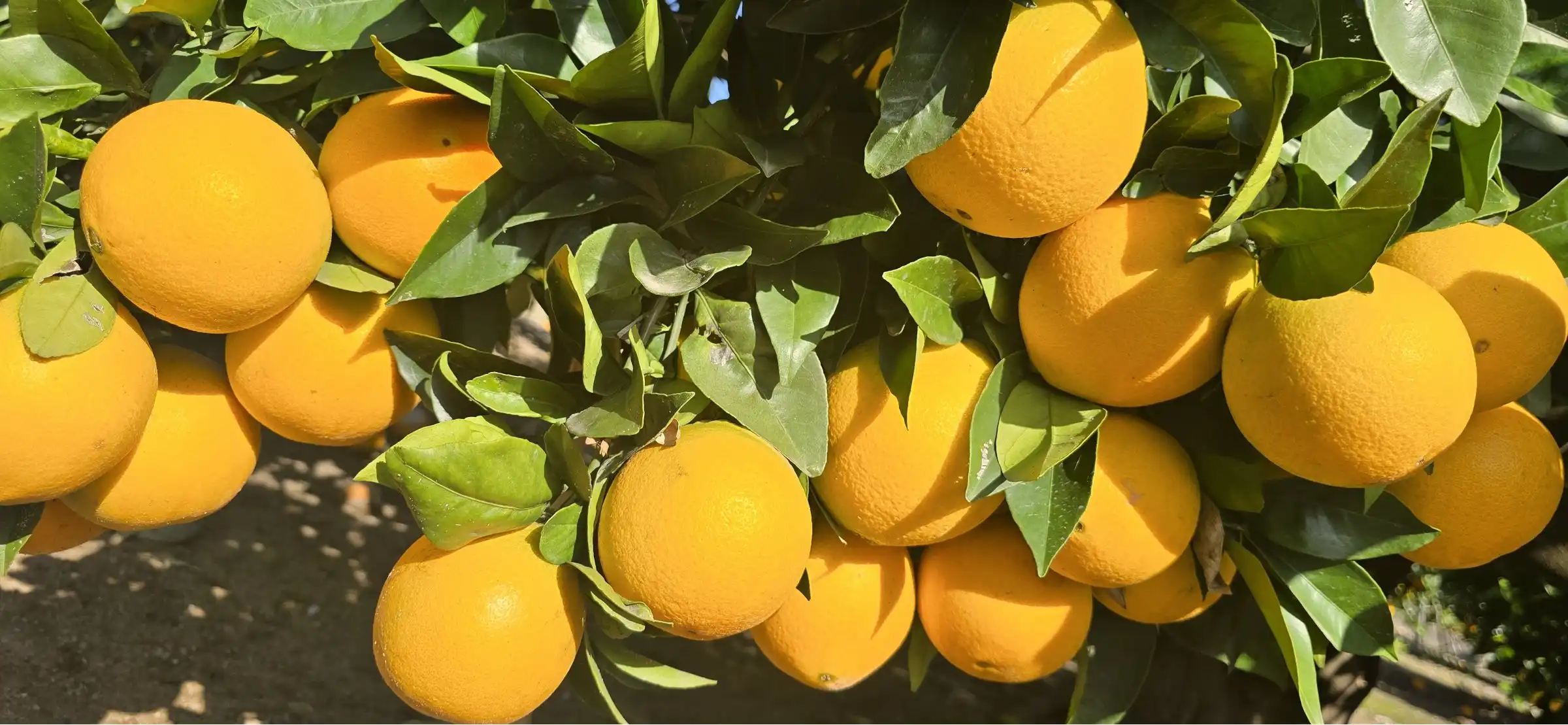
From the grove to the first box: how we decide the first shipping day for Navelina oranges
Every autumn we get asked the same question, and every autumn we give the same answer: we don't know yet. The first shipping day isn't marked on the calendar. The trees decide it. We're a family of growers from Cullera and we've spent many years looking at the same groves during these October weeks, but every season is different and the fruit lets us know when it's good and ready. This year we wanted to tell you how that journey went until we could finally say yes: the Navelina oranges are ready.
Weeks of watching and waiting
Before we taste the first orange, there are many rounds through the fields.
From the end of September, Pili, who runs our picking team and keeps an eye on the groves, goes through the Navelina plots almost every week. She looks at the size, the weight in the hand and, above all, the colour. Navelina is the earliest orange of all the ones we grow, but the skin doesn't turn from green to orange until the first cool nights arrive. If autumn is warm, as has happened in other years, the fruit can be ripe inside and still greenish on the outside.
That's why we don't rely on our eyes alone. The final verdict always comes from tasting.
The grove that is always ahead
Among all our plots there is one that, year after year, gets ahead of the rest. It's a Navelina grove of older trees, on loose soil that warms up early and faces the morning sun. There the fruit takes on colour and sugar a few days before the others, so it's always the first one we visit when it's time to decide. If the oranges aren't ready there, they aren't ready anywhere.
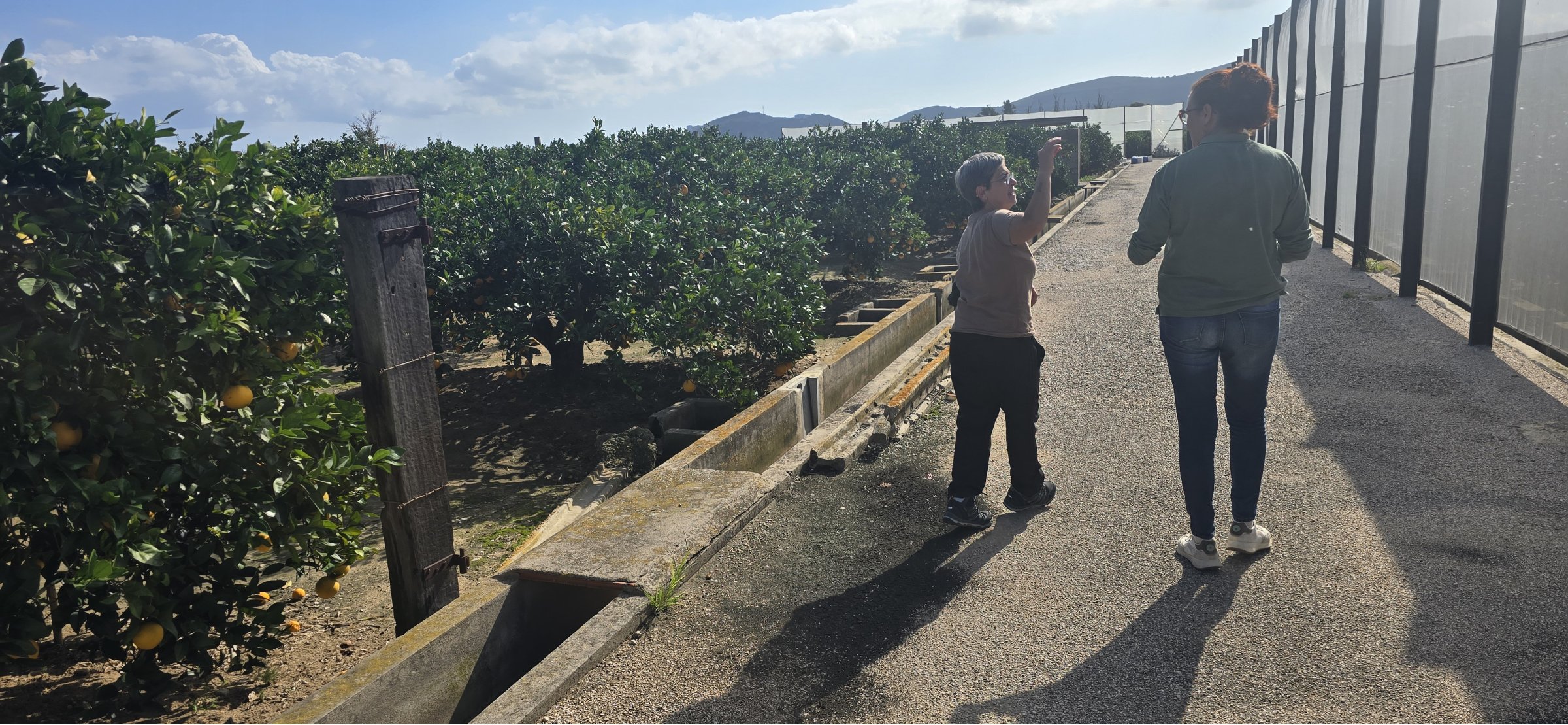
This year we went one October morning, with the dew still on the grass. Ruth and Pili walked the rows unhurriedly and picked oranges from different parts of the tree: from the side facing the sun, from the shade, from the top and from the low branches. Tasting only the best one doesn't count. If the one from the shade is already good, the whole grove is ready.
The tasting: what we look for in a Navelina
Opening an orange in the field has its own ritual. First the smell of the peel as you cut it, then the colour of the flesh and, finally, the first segment. And that's where everything is decided. We look for four things, and none of them counts on its own:
- Sweetness: the sugar has to really come through, not just the orange having stopped being sour.
- A touch of acidity: a Navelina with no acidity at all tastes flat; we want that little contrast that makes it refreshing.
- Juice: when you bite into the segment, it should drip. At the start of the season some oranges are still a bit dry inside, and those don't go out.
- Skin that peels: Navelina peels by hand, no knife needed. If the skin still clings, it needs more time.
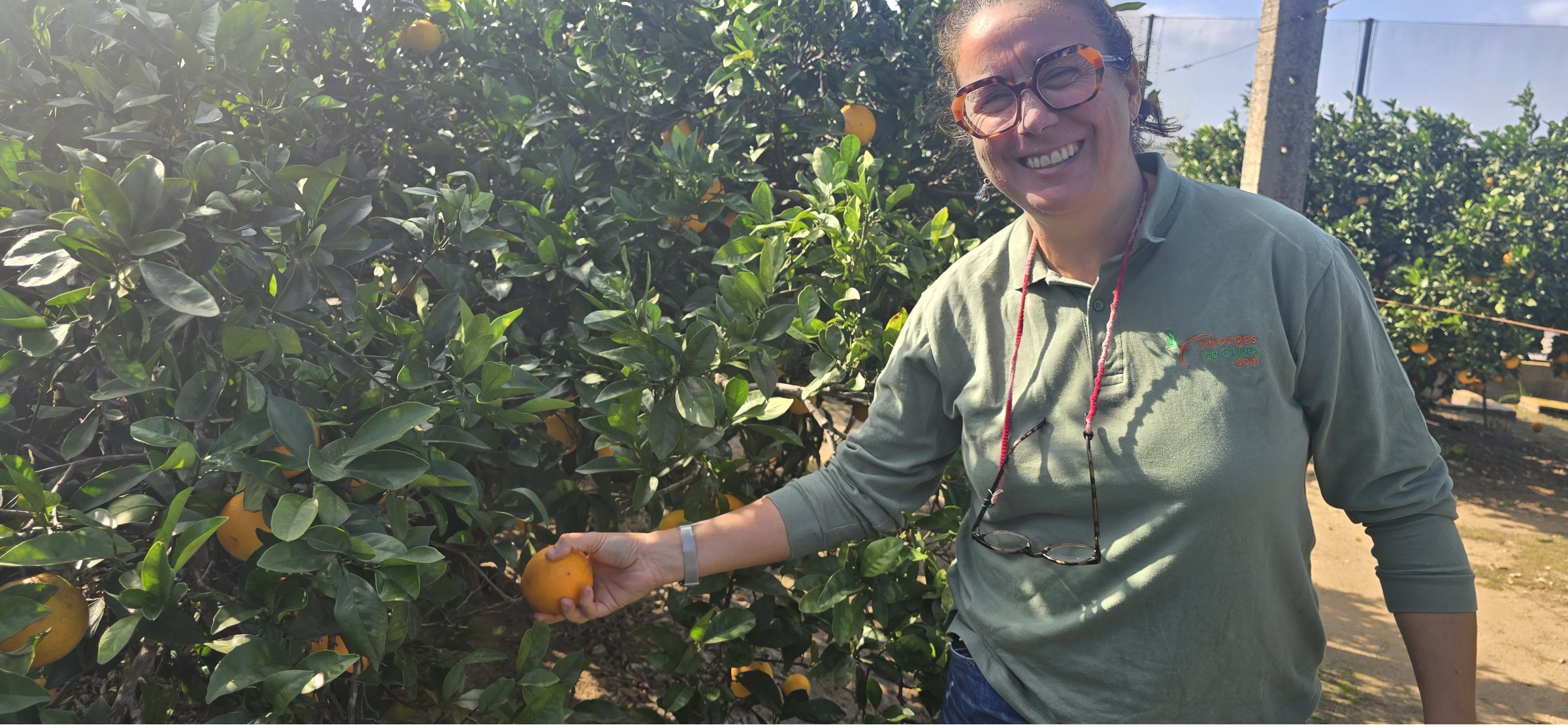
“The ones from the shade are already sweet. If these are ready, they all are.”
That's what Pili said with the second segment in her hand. Ruth tried hers and said the same. We opened another dozen, just in case, but the decision was already made.
The decision: we set a date for the first shipment
The Navelina oranges are ready. We've set the first shipping day for next week.
Some people might wonder why we don't start a few days earlier, when the fruit is already a good size. The answer is simple: an orange doesn't ripen once it's been picked. Unlike a banana or a tomato, which keep changing in the kitchen, citrus stays exactly as it is on the day it leaves the tree. If it's picked too early, it stays that way inside, no matter how many days it spends in the fruit bowl. That's why we wait until the tree has done all its work.
That has one consequence worth knowing: the first Navelina oranges of the season may arrive with slightly paler skin or with a greenish patch near the stem. That's normal. It's the colour a ripe orange has when autumn hasn't yet brought cold nights. Inside, it's just as it was when we tasted it in the field.
And meanwhile, the rest of the groves
The other Navelina plots are a few days behind and will come into harvest as we taste them, one by one. The Clemenules mandarins go at their own pace and we follow them the same way, with the same visits and the same mid-morning segments. And the winter varieties, such as Lane Late or Salustiana, still have two or three months on the tree ahead of them before anyone thinks about picking them.
Every year we ask ourselves the same question again, and every year the answer comes in its own time, neither sooner nor later. We like it that way. Waiting for the tree is, in the end, the part of this trade that has changed the least in all this time, and the one that gives the most meaning to everything else.