Mandarins Orogròs
Origin
Orogrós is a spontaneous mutation of the Oronules clementine variety, discovered by Vicente Arnau Martínez in La Vall d’Uixó, Castellón (Spain). It is registered as AVASA-PRI 26 with community plant protection (EU decision 36431) granted on October 21, 2013. No main synonyms are documented beyond its commercial name, although some records closely link it to mutations of the Oronules group and other early varieties from the IVIA program.
Characteristics
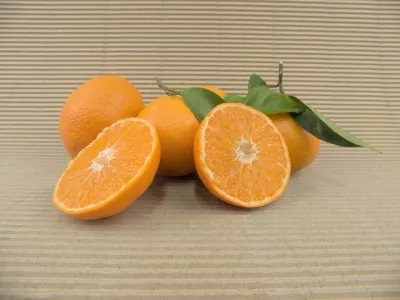
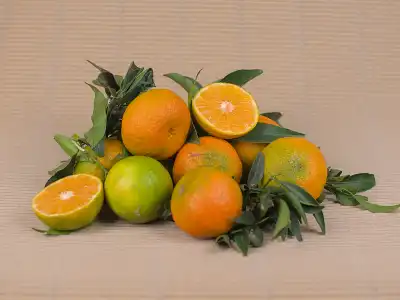
The tree has low to moderate vigor, without thorns, small, narrow leaves, and a high foliage density. A tendency toward multibud galls is observed, especially in seedlings and when the trunk is exposed to the sun. The fruit has a slightly flattened oblate shape, a diameter between 55-60 mm, and a typical weight of 90-100 g. Moderately thick peel (≈2.3 mm), intense reddish-orange color with an external chromatic index around 21-24. Orange-colored pulp, practically no seeds except with cross-pollination, juicy texture, and balanced sugar/acid flavor. °Brix between 12-15 %, acidity between 1.6-1.2 % (or titratable 1.35-0.95 g/L depending on context). Representative juice content around 50-58 % of the fruit weight.
Harvest time
In the Comunitat Valenciana, harvest typically takes place from September 20 to the end of October, although in some areas with a temperate climate it may extend to early November. It is an extra-early variety compared with Oronules, ripening about ten to fifteen days earlier. The fruit maintains good quality if it remains on the tree within the optimal external ripeness period, but delaying harvest excessively can cause puffing problems. The fresh marketing window is very early, ideal for introducing the clementine season.
Culinary uses
Mainly suitable for fresh consumption due to its sweet flavor with slight acidity, juicy pulp, and easy peeling. It can also be used for mild juice because of its good juice content, although its scarce presence of seeds and good texture make it preferable for table use. In Mediterranean cuisine it is eaten as is or incorporated into salads and citrus desserts, where its balanced flavor and bright color add aesthetic and organoleptic value.
Agronomic notes
High productivity from the first years, with early bearing. Moderate alternate bearing, although less pronounced than in other similar mutations. Sensitive to sunburn on fruit and to puffing if harvest is delayed. Requires vigorous rootstocks for grafting since the mother tree has low vigor and to avoid deformities caused by multibuds. It has no thorns, which facilitates work. In postharvest it performs well if degreening is applied; it tolerates cold storage without significant quality losses if the appropriate period is maintained. Limitations include the reduced tree lifespan due to structural problems from galls and the need for thinning and trunk protection to minimize defects.
Harvest window
In season · Ends in 37 days 20 sep → 31 octIndicative dates; may vary depending on harvest and weather.
