- Conventional season
- Varieties
- Today (1 nov)
We usually start harvesting in November, depending on ripeness.
Approximate dates: they shift from year to year with the weather. We start each variety when flavour, acidity and juice convince us, and we pull it when they no longer do. Season calendar
-
 Next to arrive
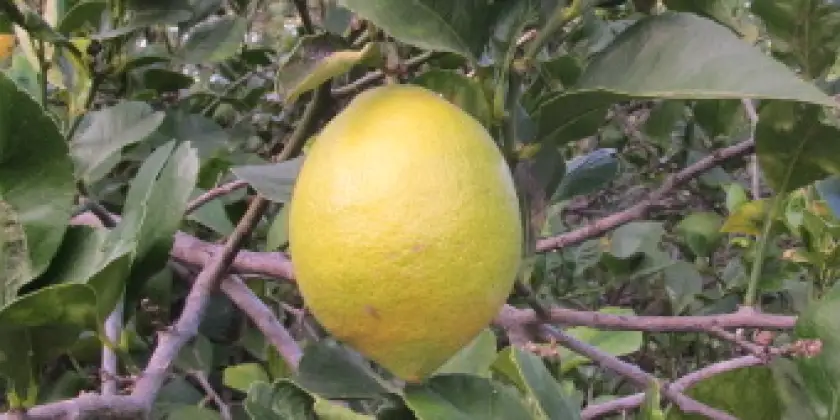
Eureka
Harvest approx. 7 nov → 13 may
The classic lemon: sharp, aromatic and 40-45% juice. Unwaxed skin. Our main variety throughout the season.
- Juice % 40–45 %
- 120–140 g
Full profile of Eureka
Variety selected in California around 1858 from seeds imported from Italian lemon (possibly Lunario), commercially introduced by Thomas A. Garey and Andrew Boyle in Los Angeles; clones such as Frost Eureka, Taylor and Allen exist. It is one of the two main lemon varieties recognized in the IVIA Germplasm Bank, with identifiers such as Eureka Allen and Eureka Frost, also used as a garden and orchard variety.
Characteristics
Medium to high vigor tree, with an open habit, a rather spreading canopy and fewer thorns than the Lisbon or Fino variety; medium to large leaf, with a crenate margin and a strong lemon smell when broken. Oval or oblong fruit, with a modest apical nipple and no neck in the peduncle area; skin relatively medium to thick (5-6 mm), yellow color at maturity; green-yellow flesh; juicy, with juice content of 40-45 % of the fruit weight; variable seeds, between 8 and 13 per fruit, depending on temperature during flowering; pronounced acidic flavor, strong classic lemon organoleptic profile.
Harvest time
In the Comunitat Valenciana the harvest for Eureka is approximately between October 10 and February 20; harvesting can begin with fruit still greenish, but when it has adequate size and sufficient juice percentage; the fruit can remain on the tree for a reasonable time without severe loss of quality if maturity and storage conditions are controlled.
Culinary uses
Variety suitable both for fresh consumption and for juice due to its high juice content and acidity; it is also used for culinary preparations that require pronounced lemon aroma such as dressings, seasonings, preserves or traditional conserves; in Mediterranean gastronomy it is incorporated into fish dishes, salads, citrus sauces, pastries and to flavor liqueurs; the zest of its peel provides essential oils with sufficient intensity for delicate uses.
Agronomic notes
It enters production early and has high productivity; a reflowering variety, with floral flushes several times a year, although the optimal commercial yield occurs between autumn-winter; moderate sensitivity to cold, less than Lisbon but with damage in very cold climates; suffers from sunburn and fruit defects if grown in very sunny exposures; postharvest is well tolerated if kept between 3-7 °C, with risk of physiological disorders such as peteca if temperatures are higher; recommended rootstock for local adaptation and to avoid chlorosis, and its longevity is lower than other varieties; commercial limitations include seed and size variability depending on the climate and the clone used.
-
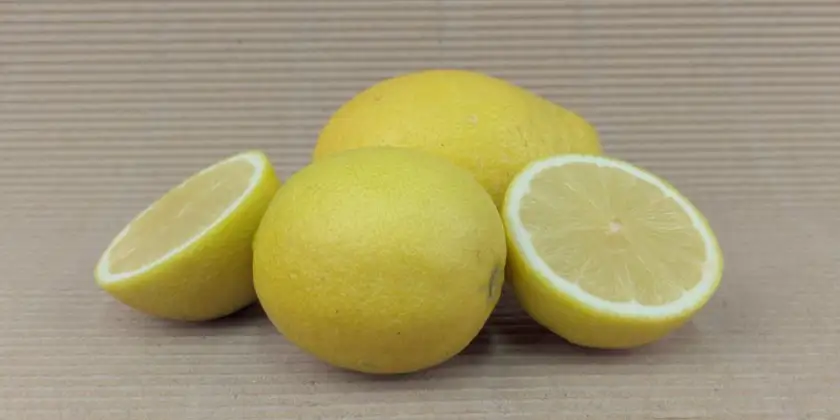
Verna
Harvest approx. 7 nov → 13 may
A lemon with a slightly thicker rind and few seeds, very juicy. We pick it alongside Eureka, so the two may be mixed in the box.
- Juice % 30–35 %
- 130–170 g
Full profile of Verna
Spanish variety of unknown origin; it is suspected to have derived from introductions of Italian lemons of the “Monachello” type in Murcia; it has been cultivated since at least the 19th century in the regions of Murcia and Alicante; also known as Berna or Vernia; some notable clones are Verna 50, Verna 51 and Verna 62, selected by IMIDA and IVIA.
Characteristics
Vigorous tree, large in size, with fewer thorns than Fino-type lemon trees; pointed leaves; it bears fruit in a reflowering pattern, with main blooms in spring and secondary blooms in summer (“rodrejos” or “verdelli”); oval fruit with a more or less marked peduncular neck and a pronounced apical nipple; relatively thick peel (6-7 mm depending on the variety; in some clones up to >10 mm), rough or semi-rough in harvested fruit, smoother in rodrejos; weight between 130-170 grams; diameter of 65-70 mm; exterior color yellow when ripe, color index around -2.5; high juice content, between 30-35 %; few seeds (2-6), number tends to increase with high temperature during flowering; number of segments around 9-10.
Harvest time
In the Comunitat Valenciana and similar areas, harvesting of the main crop typically begins between mid- and late February and continues until July; fruits from summer flowering (“rodrejos” or “verdelli”) are harvested between mid-July and mid-September of the following year if they are used; the variety can remain on the tree without significant drop until well into the season, although the last fruits may lose some quality and acidity.
Culinary uses
Suitable for table consumption due to its juicy pulp, acidic but less aggressive flavor than Fino, and aromatic profile; excellent for fresh juice; the aromatic thick peel makes it useful for zest, preserves or candied peel; it is also used in Mediterranean cuisine in drinks, dressings and dishes that make use of both juice and peel; it is not primarily used in the essential oils industry compared with thinner-skinned varieties, although its peel contains oils with a characteristic aroma.
Agronomic notes
It shows high productivity when the tree is well established, but it tends to alternate, especially after “rodrejos” harvests; more resistant to transport and remaining on the tree than thinner-skinned varieties; sensitive to attack by Prays citri and with slight susceptibility to severe cold; frequently grafted onto Citrus macrophylla or bitter orange; it may show “miriñaque” (a bulge in the graft area) when bitter orange is used; postharvest storage is good, requiring moderate cold temperatures; the last fruits of the season have lower commercial value due to loss of acidity and possible re-greening of the peel under high summer temperatures.