 Organic Farming
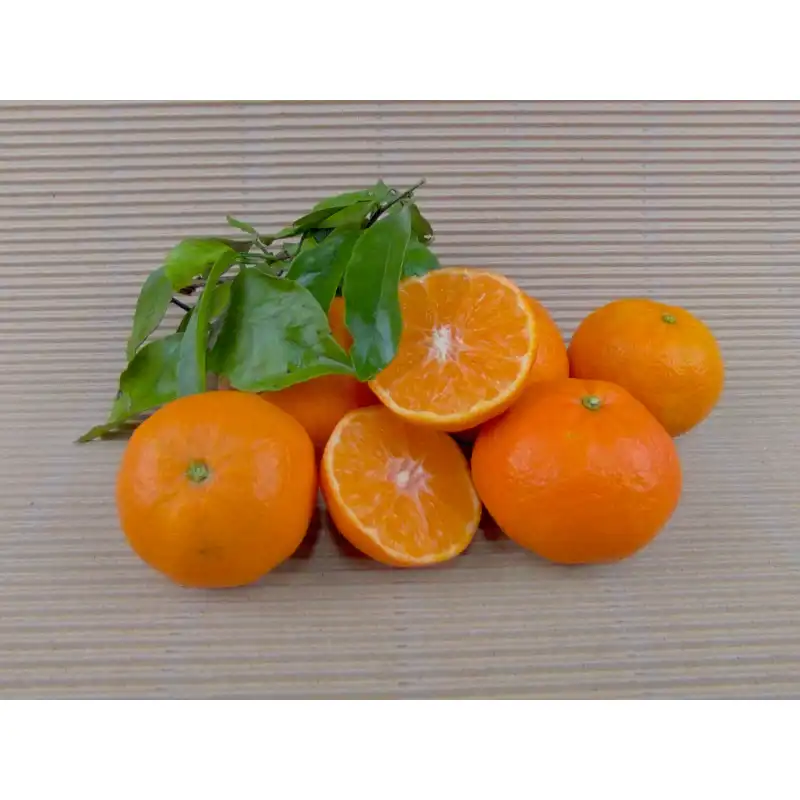
Mandarins Clemenules
Origin
Clemenules is a clementine variety that appeared as a spontaneous mutation of Clementina Fina. It was detected in Nules (province of Castellón, Comunitat Valenciana) in 1953, hence its name. It is also known as Clementina de Nules, Nulesina, Reina de las Clementinas, Victoria, among other synonyms. Since its appearance, it began to spread due to its combination of size, flavor, and adaptability, becoming one of the most widely planted clementine varieties in Spain, especially in the Comunidad Valenciana.
Characteristics
The Clemenules tree has medium to high vigor, an open structure, few or practically no thorns, and staggered flowering. The fruit is oblate or flattened in shape (diameter/height ratio of approximately 1.25), weighs between 80-100 grams, has a diameter of about 55-60 mm, a somewhat flattened shape, a thin peel of normal thickness of about 1.5-2.0 mm, and an intense orange color in both peel and pulp. Under standard conditions it produces practically seedless fruit, although some may appear if there is cross-pollination. The juice percentage is around 48-52%. In studies outside Spain, soluble solids (ºBrix) of approximately 8-10 and low titratable acidity, around 0.8-1.2 g of citric acid per 100 mL of juice, have been observed.
Harvest season
In the Comunitat Valenciana, the harvest of Clemenules is normally between late November and January; in some general calendars it extends until February, depending on the area and weather conditions. After reaching the optimal ripeness point, the fruits keep well on the tree for several days without excessive loss of quality, allowing some flexibility in harvesting. The optimal fresh marketing window runs from the start of harvest to a few weeks later if proper storage is maintained, avoiding late harvesting that could lead to loss of acidity and quality.
Culinary uses
Clemenules is especially valued as a table fruit for its easy peeling, juicy texture, balanced sweet flavor, intense citrus aroma, and practically complete absence of seeds. It is also used for fresh juice, jams or preserves, although its industrial use is lower than direct consumption. In Mediterranean cuisine it is often incorporated into salads, fresh desserts, and as an accompaniment to dishes that require a citrus touch, taking advantage of its aroma and sweetness without excessive acidity.
Agronomic notes
Clemenules has high productivity, although it can show alternate bearing if harvesting is delayed too much. It is susceptible to puffing and “pixat” if it remains on the tree for too long. Its cold tolerance is moderate; it performs better when grown on suitable rootstocks such as Citrus macrophylla, Carrizo citrange, Cleopatra, or other semi-dwarfing rootstocks that improve its habit and productivity. In postharvest it responds well to cold, maintaining quality if stored properly. Main limitations: sensitivity to cross-pollination that can generate seeds, loss of acidity if harvested late, and the need to control soil, irrigation, and nutrition conditions to ensure good fruit set and fruit size.
Harvest window
Out of season · Starts in 99 days 1 jan → 20 febIndicative dates; may vary depending on harvest and weather.
